Tell Me How
You Feel: PIT Lab
Emotion, drawn in public.
What does emotion
look like to you?
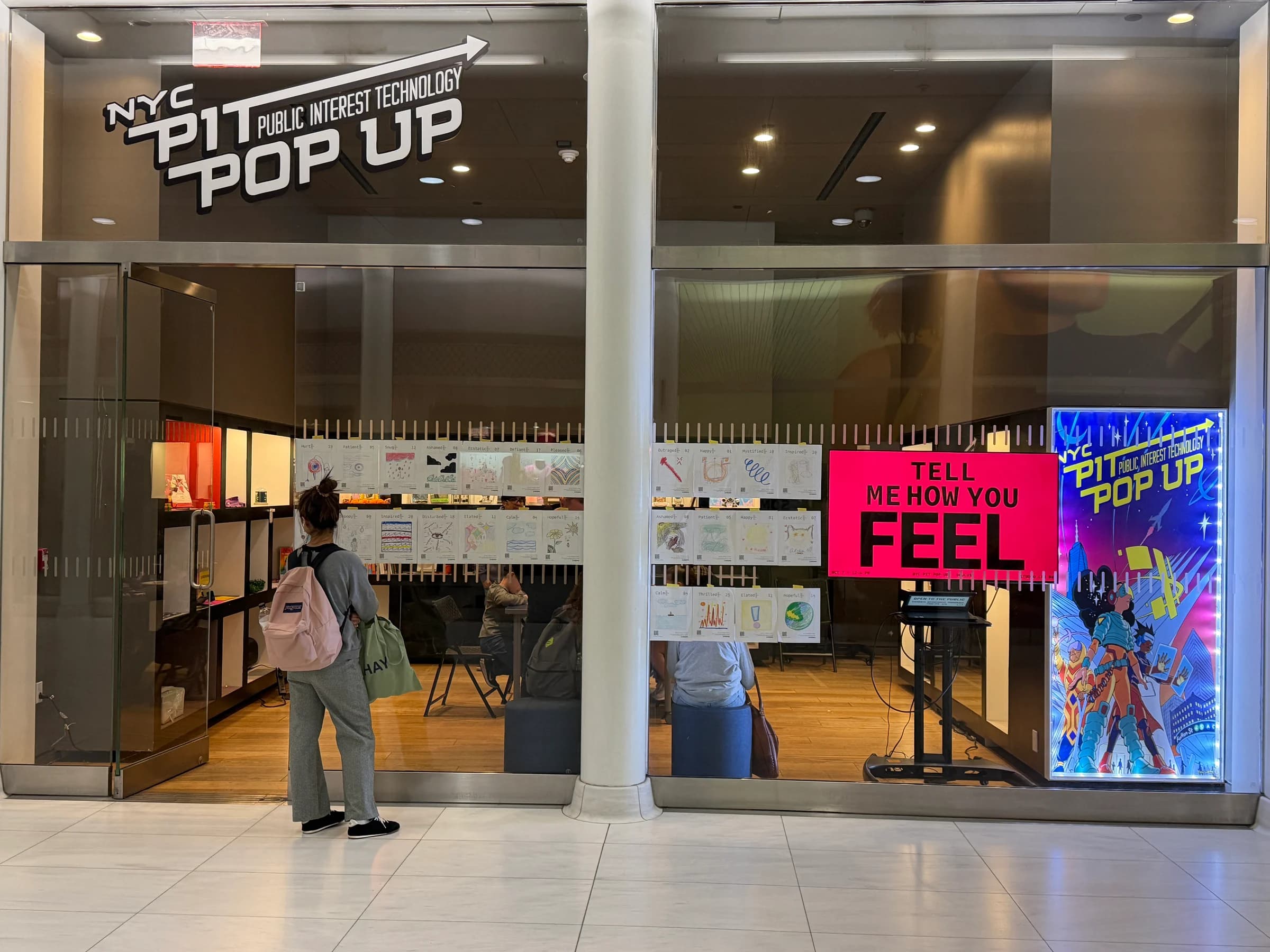
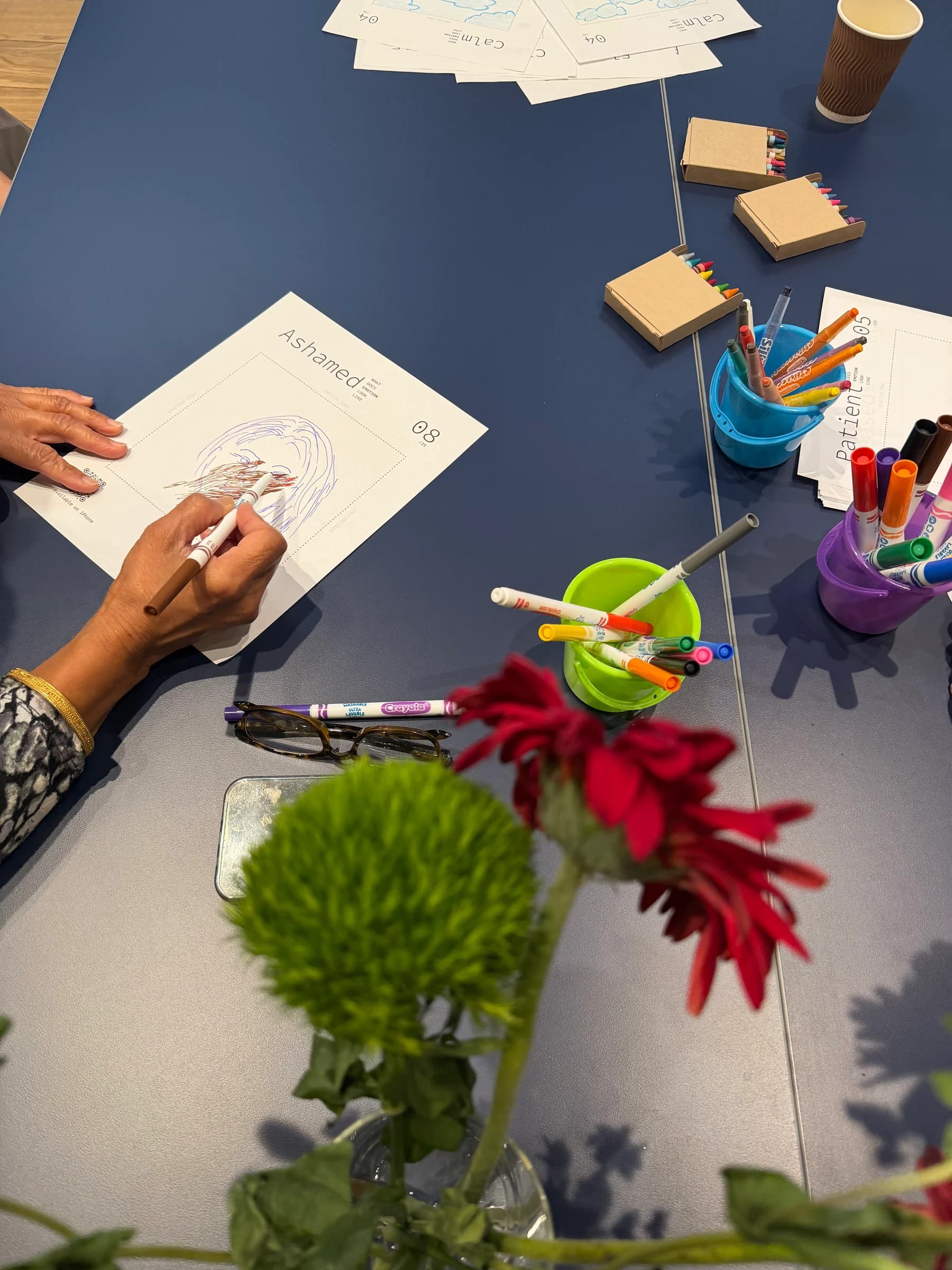
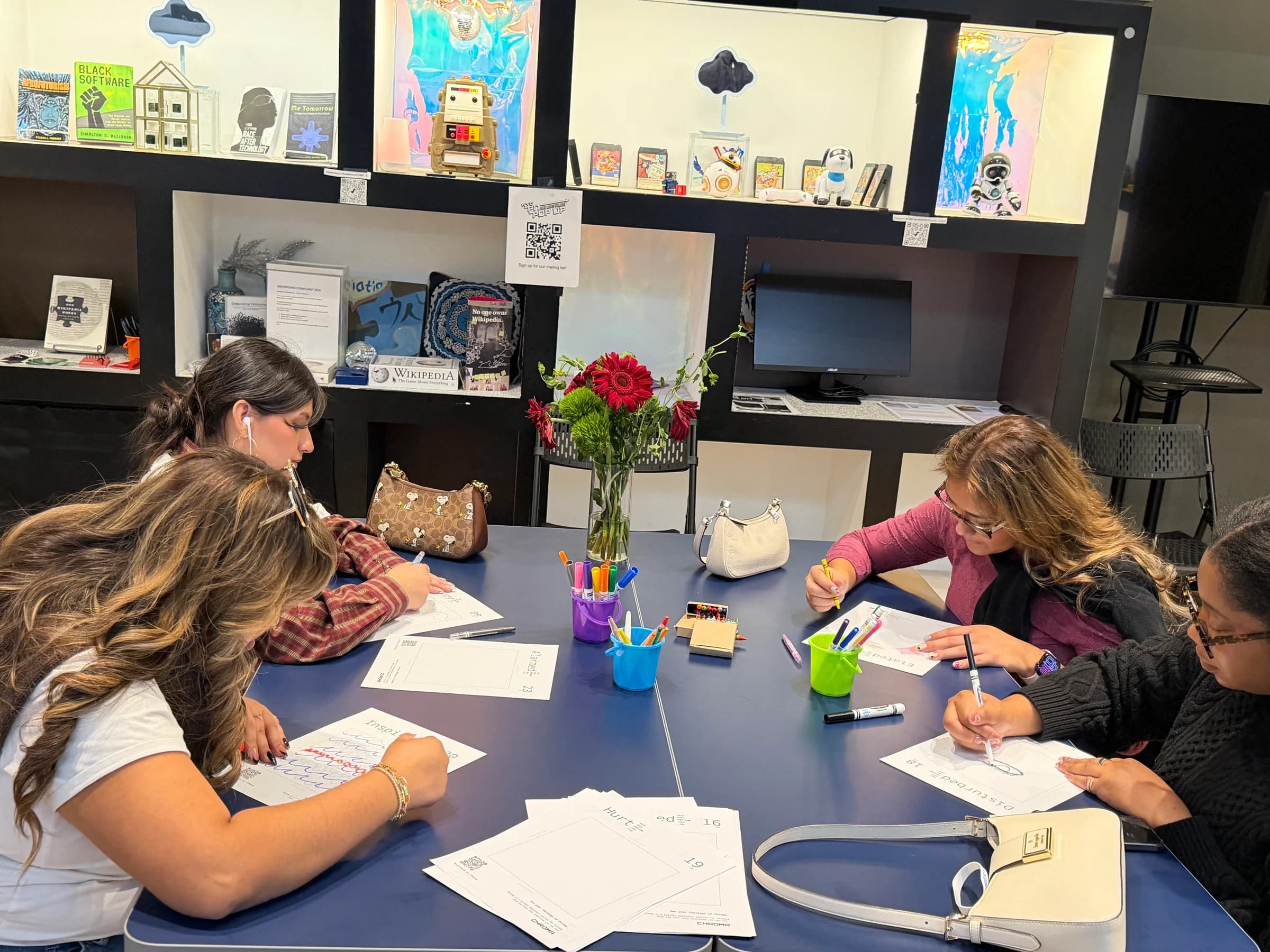
Two encounters for the launch of Social Wednesdays. At the CUNY PIT Lab pop-up, participants chose from 25 emotion prompts, made a drawing, and brought their own meanings to the word.
A word is only
a starting point.
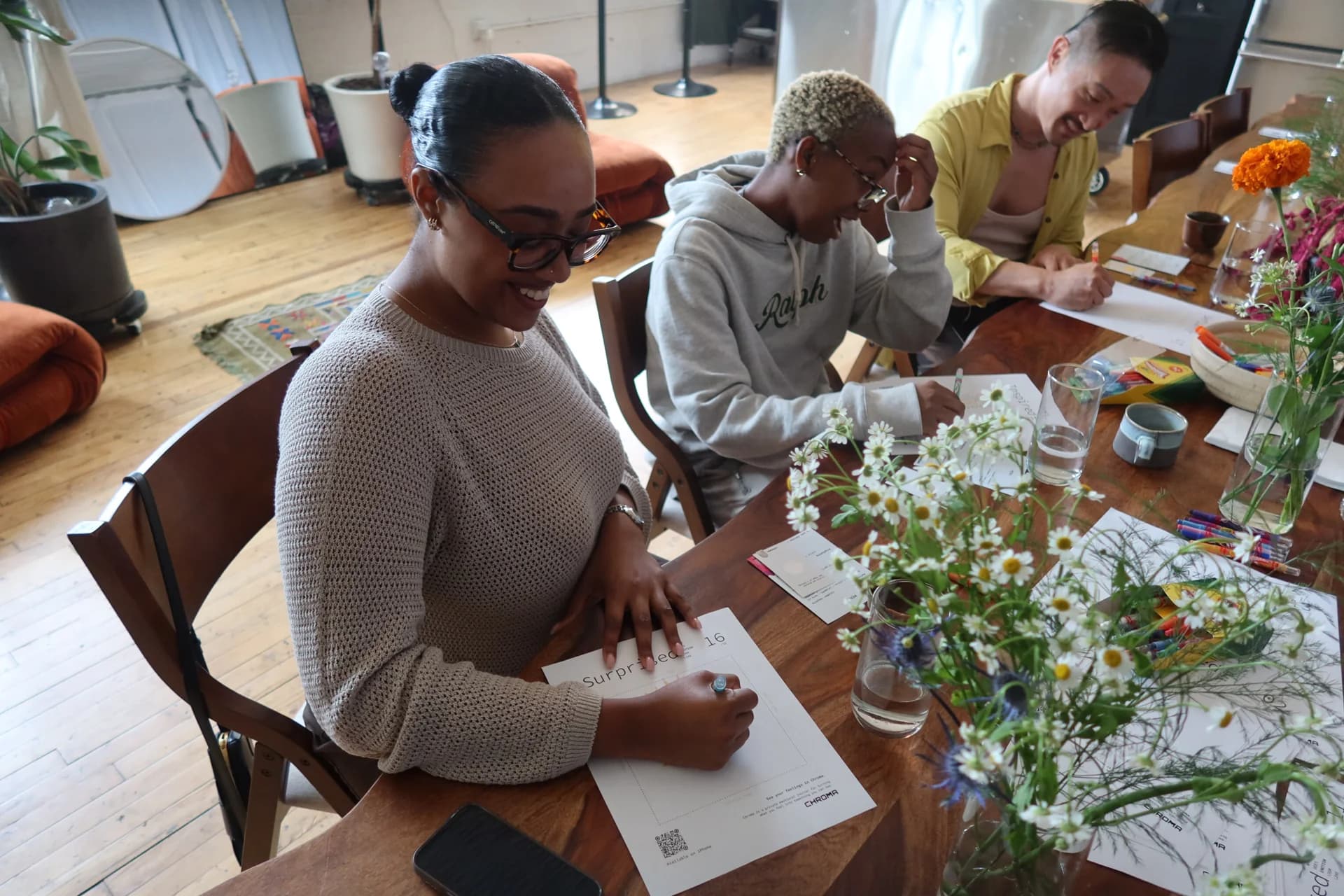
Paper, markers, and an open invitation. Each person decided how an emotion could be represented. The same prompt could hold a memory, an aspiration, a symbol, or a field of color.
Drawn by a person.
Held by its maker.
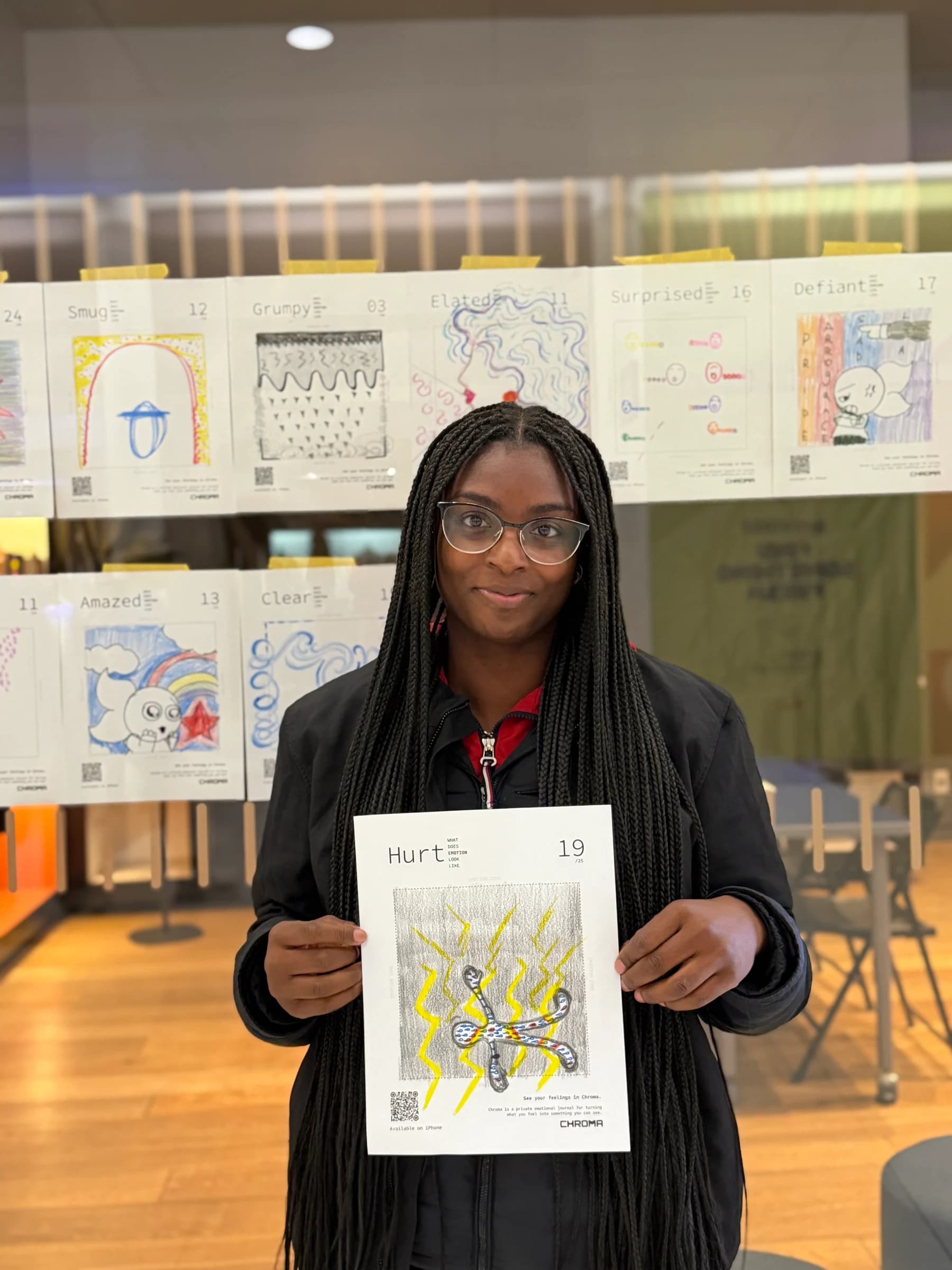
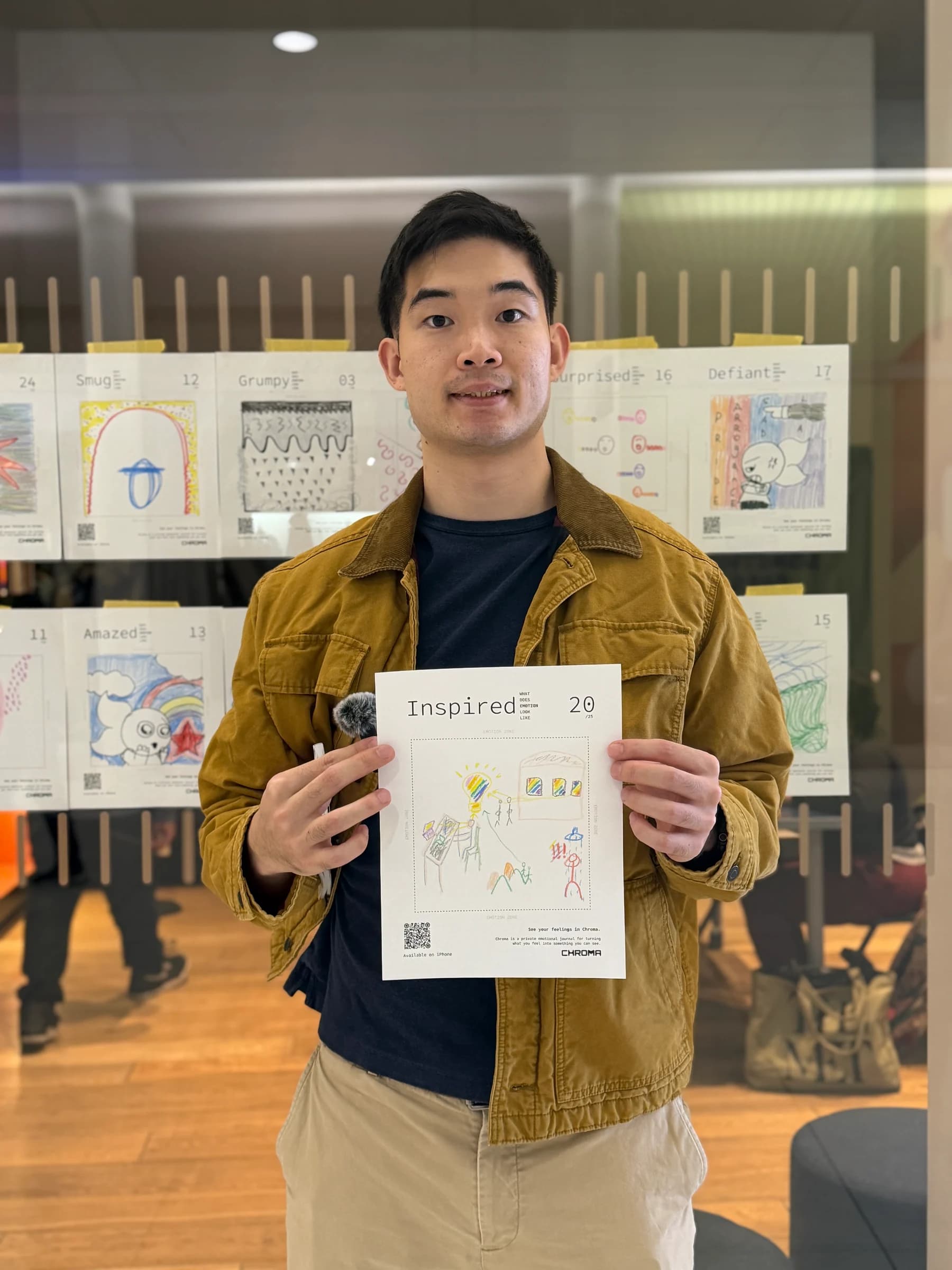
Hurt and Inspired, from October 28. A portrait keeps the drawing beside the person who made it. Its visible forms offer a starting point for conversation; the maker supplies their meaning.
The explanation
changes the reading.
One Hopeful drawing described travel to America. Another spoke through sunlight, prayer, and flowers. Those meanings emerged through conversation. By the second session, portraits and some interviews joined the drawings in the record.
A place
to pause.
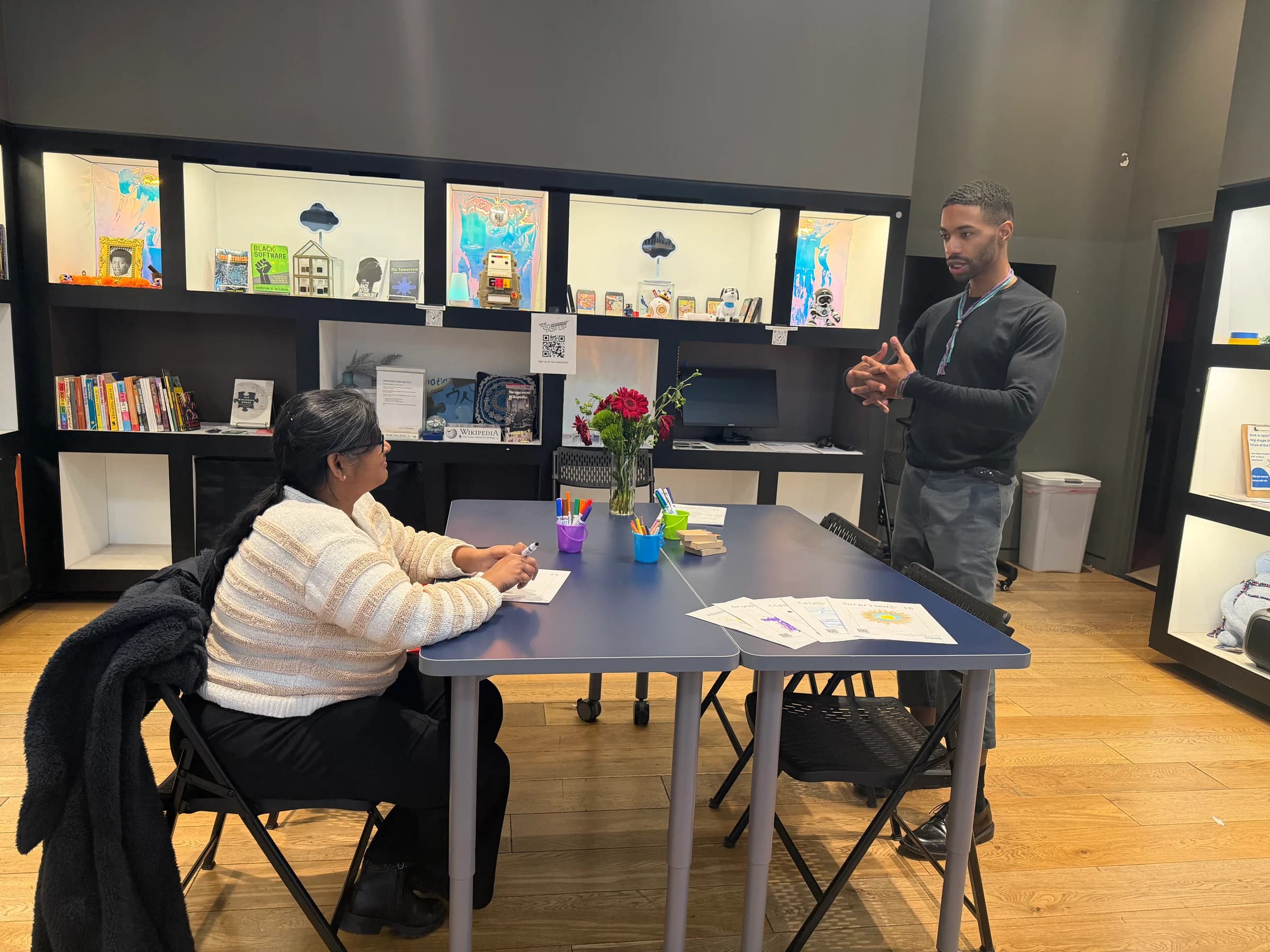
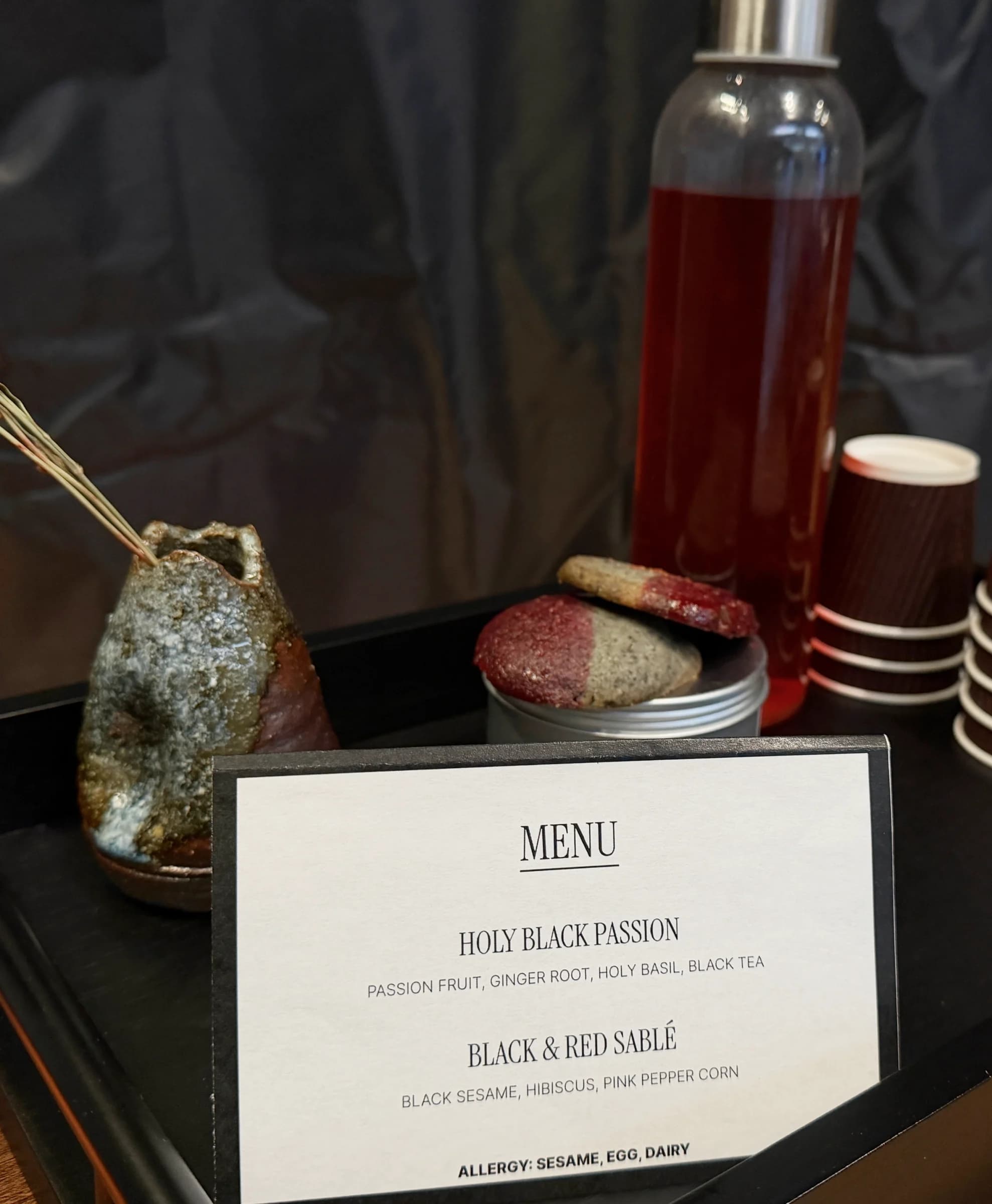
The setting developed between visits. Tea was present at the first encounter; by October 28, Studio Lab BH tea and cookies became a more deliberate part of the welcome, offering time to settle into the activity.
The invitation is
part of the research.
How the activity was introduced, who felt comfortable drawing, and whether there was time to talk shaped what could be collected. Returning to the table made those conditions visible alongside the drawings themselves.
Project details
- Dates
- October 7 & 28, 2026
- Location
- CUNY PIT Lab pop-up, Oculus, New York City
- Program
- Social Wednesdays
- Form
- Participatory drawing / public research
About the project
Two public encounters for the launch of Social Wednesdays at CUNY PIT Lab, exploring emotion through participant drawings and conversation.
On October 7 and 28, 2026, Studio Lab BH brought Tell Me How You Feel to the CUNY PIT Lab pop-up at the Oculus for the launch of Social Wednesdays. Participants selected from 25 emotion prompts, gave a word a visual form, and, where possible, shared what their drawing meant to them.
The two encounters form one developing body of research. The drawings hold individual responses; conversations supply meanings that cannot always be recovered from the image alone. Returning to the same space also made it possible to reconsider the invitation, documentation, and hospitality between sessions.
The invitation & method
Choose and draw
A participant selected an emotion from a set of 25 printed prompts and represented it through drawing. The activity invited a personal interpretation, without a correct image to reproduce or a drawing skill to demonstrate.
Describe and share
Where time and comfort allowed, participants explained their drawings. By October 28, the documentation also included portraits and some interviews, approached gradually according to each person’s willingness to take part.
On October 7, describing the activity as research proved more effective in inviting participation than describing it as an art project. Personal invitations from the corridor mattered; being present inside the pop-up did not by itself bring people to the table.
Some visitors were hesitant about drawing. This raised a question for the next invitation: how could the activity make clear that a contribution did not depend on artistic confidence?
The interviews were not standardized. Some participants spoke about the meaning of their drawing; others described the experience of taking part. The archive therefore distinguishes the drawing, its participant-defined interpretation, and the encounter itself.
What participants brought to the words
In conversations recorded in the October 7 field reflections, one participant represented Hopeful through an airplane and travel to America. Another used sunlight, prayer, and blooming flowers to speak about renewal. A shared word opened onto different memories and aspirations.
A participant associated Defiant with diversity and inclusion in STEM. Other accounts connected Mystified to layered sun and flower imagery, and Patient to clinical color associations alongside the chaos of life. These meanings come from participants’ explanations, rather than an interpretation of their colors alone.
Hospitality & the pace of participation
After October 7, the reflection was that tea had not been integrated into the encounter as fully as intended. For October 28, Studio Lab BH tea and cookies became a more deliberate part of the welcome.
One participant described tea as helping them slow down, feel centered, and reconnect with a childlike sense of creativity. This account opens a question about how the sensory and social setting shaped that person’s experience of participating.
Observations & open questions
The two sessions made the conditions of collection part of the research: how an activity is named, where an invitation happens, whether drawing feels accessible, and how much time a person has to explain their contribution.
The drawings and conversations offer material for studying differences in representation. Two public encounters do not establish universal emotional patterns or conclusions about cultural differences.
- How does describing an invitation as research or art change who feels able to participate?
- What does a participant’s explanation preserve that an image alone might leave ambiguous?
- How do hospitality, time, language, and confidence with drawing shape whose contributions enter an archive?
- How can future documentation keep the drawing, its meaning, and the experience of making it connected?
October project record
- Project
- Tell Me How You Feel: PIT Lab
- Dates
- October 7 and 28, 2026
- Setting
- CUNY PIT Lab pop-up, Oculus, New York City
- Program
- Social Wednesdays launch
- Practice
- Studio Lab BH / Brendon Hawkins
- Materials
- 25 emotion prompts, paper, markers, crayons, tea, cookies, and conversation
- Documentation
- Participant drawings, field reflections, photographs, and selected interviews